

Entrepreneurship Skill Development Program for VDVK Members
At Kalinga Institute of Social Sciences (KISS), we believe that livelihoods rooted in traditional knowledge can become powerful engines of dignity and self-reliance. The Entrepreneurship Skill Development Program (ESDP), implemented under the Van Dhan initiative, supports tribal forest gatherers in transitioning from raw material collectors to value creators and entrepreneurs.
By building skills, strengthening institutions, and enabling market linkages, the programme reimagines forest-based livelihoods as sustainable and income-generating opportunities.
Why This Matters
For many tribal communities, forests are not just a resource—they are a way of life. Yet, forest gatherers often remain at the lowest end of the value chain. They face:

Exploitation by middlemen and unfair pricing

Limited access to markets and enterprise knowledge

Low income despite intensive labour

Lack of exposure to value addition and branding
At the same time, unsustainable harvesting practices can strain fragile forest ecosystems.
The ESDP addresses both challenges—economic and environmental—by equipping communities with the skills to build enterprises while promoting responsible forest stewardship.
What We Do
KISS, as a training partner of TRIFED, implemented the ESDP across 156 clusters covering 14 districts, reaching members of Van Dhan Vikas Kendras (VDVKs).
The programme focuses on building entrepreneurial capabilities through structured, hands-on training and knowledge resources.
Key interventions include:
- 30-day Entrepreneurship Development Program (EDP) delivered to 2,500 tribal women across 78 VDVK centres
- Training on NTFP value addition, processing, and product development
- Modules on financial literacy, enterprise management, and market readiness
- Introduction to packaging, branding, and pricing strategies
- Awareness on Minimum Support Price (MSP) for 21 forest produce items
Development and distribution of training materials, including:
- Trainer reference manuals
- Information sheets on Van Dhan
- Audio-visual tools such as demonstration videos and short films
Interventions
Entrepreneurship and livelihood development
Women’s economic empowerment
Sustainable forest-based enterprises
Relevant SDGs
Impact Metrics
2500
tribal women trained across 78 VDVK centres
INCREASED
participation of women in local governance, including PRI elections
Improved
income regularity and household food security
GREATER
awareness of enterprise systems such as GST, branding, and registration
Partners

TRIFED
TDCOL
Ground impact
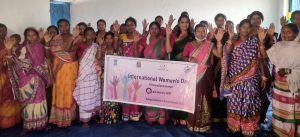
To celebrate International Women’s Day in 2021, Self-Help Group leaders of the Van Dhan Vikas Kendra (VDVK) planned a variety of activities like meetings, awareness campaigns, games, dance and music, at 21 VDVKs in Kalahandi, Kandhamal, Koraput, Keonjhar, Deogarh, Mayurbhanj and Sundargarh districts of Odisha. These celebrations were graced by numerous stakeholders such as the local Sarpanch, social activists, PAITDAs and other inspiring personnel.
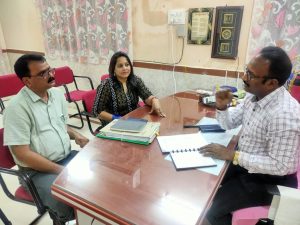
In 2021, The team for our ESDP Training for VDVK had a meeting with PA ITDA Gajapati to start up ESDP training. In addition, the team successfully completed a VDVK survey at the district level and met with the DWO and collector as well.
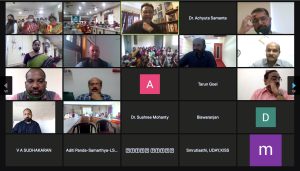
In December 2020, KISS and TRIFED, India (under Ministry of Tribal Affairs, Govt. of India) hosted the National Launch of Entrepreneurship Skill Development programme for women entrepreneurs under Van Dhan Yojana scheme for Odisha in presence of Sri Pravir Krishna IAS – MD, TRIFED and Dr. Achyuta Samanta – Founder, KIIT & KISS. The project will implement the Pradhan Mantri Dhan Yojana (PMVDY) and its convergence with Entrepreneurship & Skill Development Programme (ESDP) of Ministry of Micro, Small and Medium Enterprises (MSME). The goal is to impart skill development training to an initial target of nearly 10,000 tribal ESDP trainees per quarter, to groom them to become sustainable, independent entrepreneurs.

